

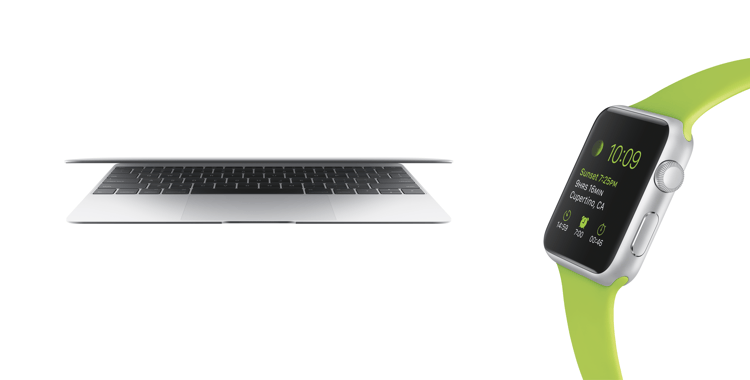
On Monday at an event in San Francisco Apple Announced the details of its upcoming Apple Watch, a new MacBook, and a ResearchKit new way for medical research institutes to collect data.

The biggest draw of the event was the details surrounding the Apple Watch. The device was introduced last fall, and Monday’s announcement provided little more than pricing information, and a glimpse at third party support. Apple also released an update to its iOS operating system to support the watch, despite the watch not being available until April 24, 2015.
 No one knows how well the Apple Watch will sell when it is released next month, but it is safe to assume at least a few will make their way into schools. As wearables continue to improve and penetrate further into the consumer market they will enviably make their way into the classroom. And while most schools are still struggling to integrate smartphones into the classroom, how schools will react with screens on students wrist remains as much a mystery as how well the Watch will sell.
 While the watch might have been the hook, the new MacBook was in many ways the star. Apple’s new laptop is the companies thinest and lightest to date weighing in at just 2 pounds. The device features a Retina display, redesigned keyboard, a new battery terraced battery system that allows for larger batteries, and a new trackpad that is able to tell how hard the user presses. The compromise for the new MacBook is its lack of ports, it only has two (a USB type-c port, and a headphone jack).
 The new MacBook will likely find its way all over college campus in the coming years, but as Fulton County Schools still struggles with trust issues, it is unlikely to see the laptop on desks in North Springs anytime soon.
 Last fall Apple introduced HealthKit, a tool that allowed Apple’s iPhone users to manage and control the data collected pertaining to the users well being. On Monday Apple introduced an extension of HealthKit called ResearchKit, that will allow research institutes to collect information about certain diseases and medical conditions directly from users.