

By: Courtney Suber
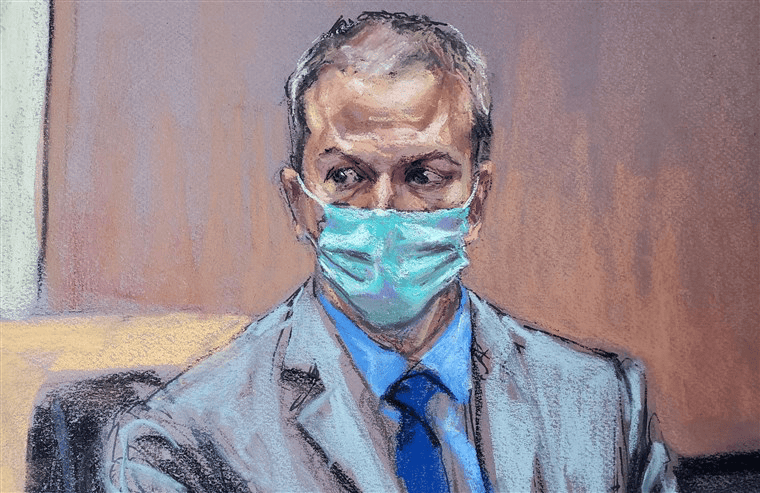
A case that has overtaken mainstream media as well as the minds of the general public, the Derek Chauvin case, concluded last week, April 20, 2021, with a conclusion that is being celebrated countrywide.
Derek Chauvin is known for the deadly altercation he had with George Floyd on May 25th, 2020. In the altercation Floyd was accused of attempting to pass a counterfeit bill. When he began to resist arrest, he asked to be held on the ground in which the officers complied. The issue that many took with this occurrence is that Chauvin placed his knee on Floyd’s neck as a form of restraint. Although meant to hold Floyd down, the maneuver cut off the entrance of airflow to his lungs, in turn tragically killing him. As Floyd suffocated under Chauvin’s control he repeatedly told officers that he couldn’t breathe but was ignored to no avail.
Chauvin’s trial was held from March 29th, 2021 to April 20, 2021, just short of a month. The jury took only ten hours to decide his fate, and as a result the former officer was found guilty of second-degree murder, third-degree murder, and second-degree manslaughter.
The verdict resulted in uproars of excitement and celebration. Less than 70 years ago in cases such as the Emmet Till case, white murderers were able to get away with the slaying of minorities in cold blood. This sentiment is also reflected in the hundreds, if not thousands, of unprosecuted lynching’s that occurred during the 20th and early 21st century. The Chauvin case marks change within the system and within our culture. At this time 30 or 40 years ago, this same verdict would not have occurred because of the inherent racial prejudice and racism engrained into our nation. Nearly every corner of American society is marred by systemic racism. We’ve seen this in housing practices such as redlining, government affairs with cases like Plessy v. Ferguson, and the violent rise of the KKK, which peaked at 5 million members during the 1920’s. This motion of change with the Chauvin case is one that does not base guiltiness on race, but accountability and validity of proof.
Despite this motioned “win”, there is still a big amount of process to be made. It’s suggested by many that the police should undergo new forms of training, be defunded, or even abolished all together and replaced with a community led option. Leaders in the African American community have also called for minority unity as well as a stop to all violence. To solve this problem within our culture not only normal people but politicians will have to address their implicit bias. The police reform bill named in George Floyd’s name required two recall votes whereas bills towards the Asian community in light of the ‘Stop Asian Hate’ movement have passed with little resistance. To truly initiate change all issues must be weighed on a similar scale, and we must address the historical events that have gone to create such problems. This case is one that will be marked in not only US history but Civil Rights and the trout towards progress for African Americans and black people in the United States, and is a must have conversation for those who feel that they are ready to address it.
