

by Jordan Bartlett
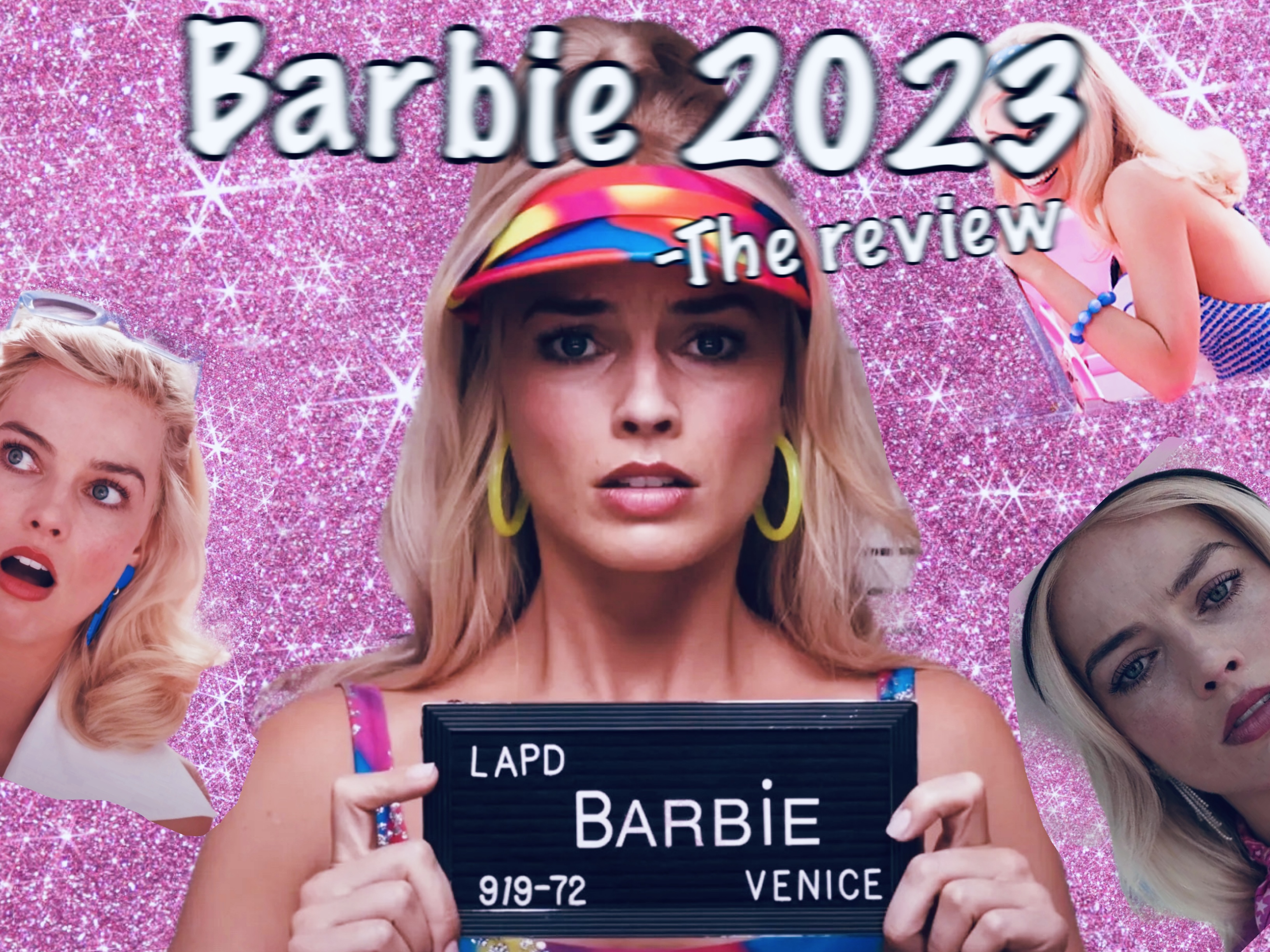
Have you ever wished that you could go back in time? Back to your childhood, when you spent every waking moment playing with your toys in their innocence? That is a theme that recurs throughout Greta Gerwig’s “Barbie.” This live-action film shows its ability to connect with young girls and those who are entering womanhood. There is a great deal of significance for women and girls in this film, which leaves a lasting impression for girls about growing up with and empowered by Barbie dolls and about entering adulthood without one.
The film’s symbolic abundance of pink colors brighten the mood as soon as the movie starts, but feelings of sorrow develop quickly after, and both the film’s palette and situation become murkier. At the start, the mood is vibrant and joyful, with bright shades of pink on all the Barbie’s houses, cars and even streets. There’s dancing, music, and laughter in the perfect place of Barbie Land. As Barbie (Margot Robbie) gets ready for the day, Lizzo’s ‘Pink’ grabs the audience’s attention right away. Later in the song, Barbie discovers that something about herself is unusual. Her showers have become, she’s falling from the roof, and her heels are touching the ground. She has planned a party, but she finds herself stuck in an unwanted cycle of her Barbie lifestyle. In the middle of Barbie’s dancing, she says, ‘Do you guys ever think about dying?’ to the other Barbies. Her question leaves them in shock, not only because it’s not something Barbie would say but because it was questionable as to why the “Perfect Barbie doll” would even ask such a thing. Immediately, she visits the outcast, mutilated “Weird Barbie” (Kate McKinnon) to understand why all those strange things were happening to her. She no longer met the criteria of being a stereotypical Barbie.
As Barbie drives herself out of this pink paradise, she is startled by her boyfriend Ken (Ryan Gosling) who unexpectedly shows up in the backseat of her car. Ken has undeniable feelings for Barbie, but they aren’t quite reciprocated from her. After a lot of consideration, she lets Ken ride along and they both travel to Los Angeles, California. Barbie’s quest to locate the tween who plays with her, ‘Sasha’, quickly escalates into chaos, as she realizes that for the first time, she is not desired as a doll. Sasha doesn’t seem amused by Barbie and thinks of her as a feminist who only creates negative stereotypes about women. Barbie has finally come to the realization that she may not be as effective in empowering women as she thinks. These realizations reflect the self-doubt and patronizing that so many women face.
While Ken is in Los Angeles, the film switches from women dominating the world in Barbie Land to men dominating the world in Los Angeles (The Real World). As Ken strolls through an office building, he notices that only strong men, men in suits, and signs with cowboys on them are present. Because he only sees men working in the “real world,”, he automatically adapts to the mindset of men ruling the world, which is something he isn’t familiar with in Barbie land. He takes that concept and implements the idea that he is the one in control, even over Barbie. He takes a completely different approach to what Barbie has learned not to depict “Women Ruling the World.” He reflected something quite similar, but he just replaced women with men—a very dark take on patriarchal society for a film that people thought was going to be a glorified Mattel toy commercial
As soon as Barbie realizes the injustice she’s done through her actions to women in the Real World, she brings Sasha and her mother “Gloria” with her to Barbie land. When they arrive, Barbie gives them a visit to Barbie’s dream house, but unknowingly Ken has turned Barbie’s home into his own “Mojo dojo Casa home.” The other Kens each have their own house where they wear cowboy outfits, have their own cars and are served and taken care of by the other Barbie’s. The Kens even go so far as to take over Barbie’s jobs. All this makes Barbie feel worthless inside and almost like she’s nothing without Ken, which is how Ken used to feel before he made Barbie land his own. Sasha, her mother, Weird Barbie and Stereotypical Barbie all make a plan to win Barbie land back and stop the other Barbie’s from getting brainwashed by the Ken’s. First, they attempt to play “dumb” as a way of getting the Ken’s to become distracted while trying to help that particular Barbie. This poignant take on how women can weaponize men’s stereotypical perceptions of them fathers and develops the plot.
As Ken is distracted, a Barbie is lured into the van with them until they can get all the Barbie’s back to their senses. Then, as a way of making the Ken’s jealous, while Ken plays Barbie a song, they all switch back and forth to different kens, which makes the kens turn against each other. As she returns to the Mojo Dojo Casa houses, Barbie visits Ken and informs him that she doesn’t have any genuine feelings for him. This takes a huge toll on him, as he tries his best to hide that he’s saddened by it. Not only does this situation in the film raise awareness about stereotypes of women, it acknowledges the struggles that men also face.
Ken is embarrassed to cry in front of a woman, a feeling that is common among men. There are many men around the world who have experienced and still endure the feeling of not being “manly” enough to express emotions of sadness. It is only when Barbie encourages Ken to discover himself that he acknowledges that he doesn’t feel like he’s someone without her name attached. After that, Ken develops a newfound confidence in discovering his own identity without his ‘Woman’, Barbie. Barbie’s journey and descent into darkness and self-doubt have not only empowered her, but allowed Ken to become who he is without defining himself through a woman.
Barbie literally meets her maker in a surreal moment as she meets the woman in the real world who created her (Rea Perlman). Her creator is not a glamorous starlet, but a comely woman with an idea. The idea of what can empower girls is the ultimate power in this world, and the message that carries throughout the film. Barbie ultimately takes the initiative to follow her own advice and discover who she truly is, aside from the “perfect” Barbie doll. Having spoken with her owner, she presses her way into the real world to discover the real things, not just the things planned for her. Breaking that cycle of being the stereotypical Barbie, she applies for her first job as she returns to Los Angeles. This time, she has a clearer idea of who she wants to be and how she chooses to inspire.
Overall, the Barbie movie teaches people that both men and women should be loved and appreciated. It serves as an excellent lesson not to little girls and women worldwide that they are strong and beautiful, no matter what, but it also takes time to show that it’s okay for men to find themselves and be themselves without objectifying or needing anyone else. In the end, the film portrays a diversity of women as young girls who develop into strong young ladies, from being gifted Barbie dolls to those who may get throw away as they get older.